
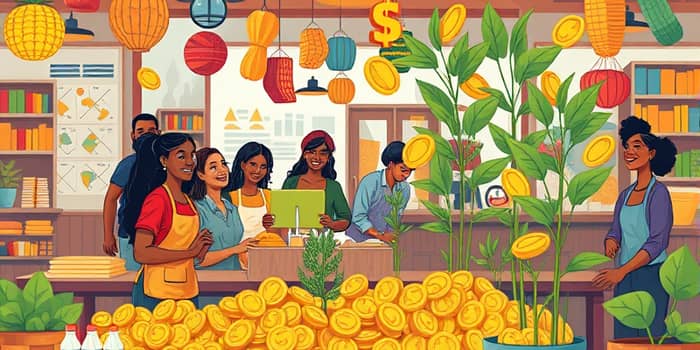
In an era where access to capital remains unevenly distributed, microloans stand out as a breakthrough instrument of change. By offering small injections of funding to those overlooked by traditional banks, these loans have generated widespread economic growth and job creation in communities around the globe.
From bustling urban markets to rural villages, people are using microloans to kick-start ventures, lift families out of poverty, and build sustainable futures. This article explores how microloans work, who benefits, and why every dollar matters when properly directed.
Understanding Microloans and Their Impact
At their core, microloans are small but powerful financial tools designed to fund entrepreneurs, artisans, and service providers. In the United States, the SBA microloan program caps loans at $50,000, with an average loan size of $16,557 in 2021. Globally, the typical microfinance loan hovers around $500, though organizations like Grameen Bank in Bangladesh may disburse loans as modest as $27.
Far from being one-dimensional, microfinance often includes savings products, insurance, and training—creating a holistic support system. Recipients gain not only the funds to purchase inventory or equipment but also the knowledge and confidence to manage their finances effectively.
The Mechanisms Behind Microfinance
Microloans are typically provided by community-based nonprofits or peer-to-peer platforms such as Kiva. These intermediaries vet applicants, disburse funds, and offer ongoing support. Lenders—whether philanthropic individuals or impact investors—can see detailed profiles of borrowers, fostering trust and transparency across borders.
Interest rates vary by provider, reflecting administrative costs and local market conditions. Yet repayment rates remain remarkably high. Kiva, for instance, reports a 96.4% repayment rate, allowing funds to be recycled and benefit new entrepreneurs continually.
Common Uses of Microloans
- Working capital to cover daily expenses and cash flow gaps
- Purchasing essential equipment and machinery
- Stocking inventory and supplies for retail or production
- Upgrading furniture, fixtures, or simple renovations
- Investing in training, marketing, and business expansion
By focusing on these targeted needs, microloans avoid the pitfalls of predatory lending and empower borrowers to grow sustainably.
Key Microloan Statistics at a Glance
Real-Life Success Stories
Meet Sarah, a seamstress in rural Georgia. With a $2,500 microloan, she went from stitching by candlelight to opening her own retail boutique that now employs four neighbors. Her story illustrates how targeted funding sparks transformation.
Across the globe, a bike repair mechanic in Kenya used a $350 loan to buy specialized tools, boosting his daily revenue by 150%. In Bangladesh, small-scale farmers leverage microloans to purchase high-yield seed varieties, leading to increased harvests and community food security.
Financial and Social Benefits
Beyond revenue growth, 77% of microloan recipients report increased savings balances, while 91% feel more confident managing household budgets. Many cite the ability to afford emergency expenses—like healthcare or school fees—as life-changing. These tangible financial improvements translate into better education, health, and living conditions.
For women entrepreneurs, microloans are particularly transformative. Over 80% of Kiva loans and 97% of Grameen Bank loans go to women, challenging traditional gender roles and fostering greater economic independence.
Challenges and Considerations
Despite their benefits, microloans are not a cure-all. They are unsuitable for high-capital needs like real estate and can pose risks if borrowers overextend themselves. In some regions, limited digital infrastructure hinders loan application and repayment processes.
Critics also warn of potential mission drift, where commercialization pressures could push interest rates higher. Sustainable microfinance must balance financial viability with social impact, ensuring that the poorest borrowers remain the priority.
Looking Forward: Innovations and Future Directions
Technology is revolutionizing microfinance. Mobile banking apps, blockchain-based lending, and AI-driven credit scoring are expanding reach to remote areas. These innovations promise lower costs, faster disbursements, and more accurate risk assessments.
Impact investors are also creating blended finance models—combining grants, equity, and debt—to support social enterprises that generate both profit and social good. Such approaches can amplify the ripple effects of microloans across entire value chains.
Accessing a Microloan or Becoming a Microlender
- Partner with community nonprofits or SBA-approved lenders in your region.
- Explore peer-to-peer platforms like Kiva to connect with global entrepreneurs.
- Consider impact funds or local credit unions offering microfinance products.
Whether you need capital or want to make a difference, the microloan ecosystem offers multiple entry points. Each loan—even a few hundred dollars—can be the seed that grows into a flourishing enterprise.
Conclusion: The Lasting Power of Small Loans
Microloans demonstrate that small-scale borrowing can spark big transformations. By channeling resources to driven individuals, these loans not only fuel business ventures but also strengthen families and communities. They stand as a testament to the idea that when provided with opportunity, people everywhere have the creativity and drive to build brighter futures.
As innovations continue to lower barriers and broaden access, the potential impact of microloans is boundless. Join this movement—whether as a borrower, lender, or advocate—and witness how tiny investments can shape monumental change.
References
- https://www.sba.gov/funding-programs/loans/microloans
- https://socialjusticeresourcecenter.org/facts-and-figures/microfinance-facts-figures/
- https://www.kiva.org/microfinance
- https://fitsmallbusiness.com/microfinance-statistics/
- https://www.congress.gov/crs-product/R41057
- https://fastercapital.com/content/Microloan-Success-Stories--How-Entrepreneurs-Thrived-with-Small-Investments.html
- https://www.investopedia.com/articles/personal-finance/040715/what-microlending-and-how-does-it-work.asp
- https://www.un.org/africarenewal/magazine/august-2015/microfinance-good-poor